Two lines of work, one discipline
Does your AI workflow meet a bar set before the test?
AI Accuracy ProofOne document-reading AI workflow, measured from the outside against a test set and pass marks frozen in writing first. Fixed fee, set before the work starts.
See how the AI test works Programs · Public and nonprofitFunders, boards, and councils want proof.
Program Evaluation & ReportingProgram evaluation, surveys, needs assessments, data analysis, and source verification for nonprofits and public programs, with published samples you can open.
See the services and samplesProgram evaluation, surveys, and reporting
Funders, boards, and councils want proof. For nonprofits, public programs, and the federal reviewers they answer to.
Does the program work?
Program EvaluationProcess evaluation (is the program running the way it was designed and funded to run) and outcome evaluation (did it produce the change it promised), tied to your funder's measures. For a state or federal pass-through program, that includes a statutorily required cycle, such as the five-year evaluation IMLS asks of state LSTA programs, or a retrospective and process assessment feeding your next state plan.
See it in the evaluation sampleWhat do the people you serve actually say?
Survey Design & AnalysisSatisfaction, stakeholder, and community surveys: designed, fielded online (sent out and the responses collected), and analyzed. Instruments and interviews can be fielded in English or Spanish.
See a parent survey read inside the evaluation sampleWhat does the field around you look like in the figures already published?
Needs AssessmentsNeeds assessments and environmental scans (a structured look at your community's needs and who else already serves them) that ground your next grant application, program accreditation self-study (ACEN, CCNE, NLN CNEA), or state plan in evidence. Our legal basis for handling student records under FERPA's audit and evaluation exception is written and checkable on our governance page.
See it in the outcome-data sampleWhere did that number come from?
Data Analysis & ReportingWe clean, analyze, visualize, and narrate the data you already have, whether that is a single spreadsheet or years of records across several programs and sites.
See it in the capacity sample and check our own work in the public demonstrationCan the claims in a published report be trusted?
Verification & Source AssuranceEvery source file behind a figure is retained with its cryptographic hash, so any number in a deliverable can be checked against the exact file it came from. Available as a standalone check on data or reporting you already have, not only inside a full evaluation.
See it in the verification sampleEvaluation Retainer. Offered to returning clients after a first engagement: first-in-line scheduling across your programs, with the monthly hours cap set in writing.
See the standard before you commit
These published examples are for the program, survey, reporting, and verification work. None of them is an AI accuracy report.
Published examples, each answering a different question, built to a standard modeled on the analytic discipline of ICD 203, the same rigor federal program-evaluation standards (OMB M-20-12) and survey standards (OMB Statistical Policy Directive No. 2) ask for. Every engagement is tailored to your program and your funder's requirements, so treat these as the standard, not a template.
A real evaluation runs on data that belongs to the client and never gets published. So some of these are built on invented data and say so on their covers. The others are public records, and you can check every figure yourself.
Each card opens to the full description and the file. Each sample names who it was written for. Where none of these is built for your seat, we say so plainly and point you to the closest one. What it costs is answered under common questions.
Outcome-data demonstration
real public records
How do the programs compare on the state's published tables?
Open the sample
You fund or run youth programs, the state already publishes outcome figures about them, and you want to know what those figures can and cannot tell you.
Thirty-five Tampa Bay youth prevention programs, read from Florida's own published tables.
- Which programs the published completion rate can still tell apart, and where every row prints 100
- Why a reoffense gap between program types is real arithmetic and still cannot rank programs
- Six rates the state prints that this report will not repeat, and the rule that decides it
You weigh renewals with the state's published tables in front of you and need to know which comparisons hold.
Your program's row is in those tables, and you want to read it the way a funder will before the funder does.
You publish the tables, and you want to see how an outside reader handles the small cells and the ceilings in them.
Program evaluation
invented data
Does the program work?
Open the sample
A funder is asking whether your program works, and right now the only answer you have is your own.
An after-school program across three sites, one term. Attendance and a parent survey, read together.
- What share of funded seats went unused
- Whether the sites really differ once the noise is accounted for
- Every finding: the evidence, the confidence, and what would change our mind
Your grant requires an evaluation, and it has to satisfy the funder who wrote the requirement.
You want a veteran-owned firm that already understands how these programs are funded and measured.
You want independent evaluation of a grantee that you can put in front of your board.
Reporting capacity build
invented data
Where did that number come from?
Open the sample
You can produce the reports your funders ask for, but you could not quickly prove where any one number came from.
An organization running five programs against four funders.
- Where the reporting hours actually go
- How one measure ended up with three live definitions at once
- A rebuild of two filed reports that found figures already wrong, one of them ours
You answer to a board or a council for outcomes, and every number you hand them has to hold up line by line.
Several partner organizations report into one shared set of numbers, and the definitions do not always match.
You administer sub-grants or a statutory program report on a fixed federal clock, such as a state library's LSTA five-year plan, and every figure you hand up has to survive review.
Public demonstration
real public records
Can I check your work myself?
Open the sample
You are weighing Rojas Strategic Consulting against a university or a national firm, and you want to check the work yourself before you decide.
A census of all eleven of Florida's children's-services special districts.
- What each is authorized to spend, and how much comes from property tax
- Every figure read from that district's own budget document, with the one flagged where the adopted figure was not yet final
- Every source file cited with its hash, so you can retrieve it yourself and confirm you have the same file we used
Real public-sector figures, from real districts, every source retained so you can check the work without contacting us. This census covers all eleven of Florida's children's-services special districts by name, so if your agency is one of them, check whether yours is in it. The outcome-data sample below is the closer match to what a county or state buyer commissions, a program study on the state's own published figures. Both are the standard we would bring to a study your department, board, or program office commissioned.
Verification report
real public records
Can the claims in a published report be trusted?
Open the sample
You publish claims, or you rely on someone else's, and you would rather check them before someone else does.
Forty claims from a Pentagon Inspector General report, each traced to the document it cites.
- Nineteen stand as stated, twelve are right in general but off in a named detail, and nine rest on records no public document carries
- The directive the report called undone took effect four days after the report was released
- Every claim with its source, its verdict and a confidence grade, and every "cannot tell" said out loud instead of guessed
Your published claims will be checked by someone. This is what that check looks like when it is done for you first.
You want the figures a grantee filed traced to their sources before you put them in front of your board.
You want to know which of your statements the record backs, which it half backs, and which it cannot settle, before the auditor tells you.
Four stages, start to finish
Every evaluation moves through the same four stages, so you always know where your project stands.
We start with your stakeholders and your funder's requirements.
An evaluation plan you approve: the questions, the measures, the timeline.
Surveys, interviews, and records, analyzed against the plan.
A funder-ready report in plain language, with a findings briefing.
Three steps, no surprises
Tell us what you need to prove and to whom. We ask the counting questions.
A written scope and a single price, not a range. If the scope grows, we re-scope in writing.
A funder-ready report and a findings briefing, on a timeline set in your written scope.
Rigor at a small organization's budget
One fixed fee, agreed in writing before the work starts, with no hourly meter and no invoice you did not see coming.
Third-party results a funder trusts more than self-report.
A report on data you already hold: ten business days from the booked start date. A stakeholder survey: about three weeks. A reporting capacity build: about six weeks. Each start date and schedule is agreed in writing before you pay. A full program evaluation and an AI Accuracy Proof each run on the schedule set in the written scope.
Methods stated, limitations disclosed. If a deliverable falls short of what we promised, we make it right.
In evaluation work, direct identifiers (names, contact details, dates of birth, Social Security numbers) are removed before we analyze anything, small groups are suppressed in what we report, and your data never goes to a third-party AI service. Full practice on our governance page.
An analyst, not an agency
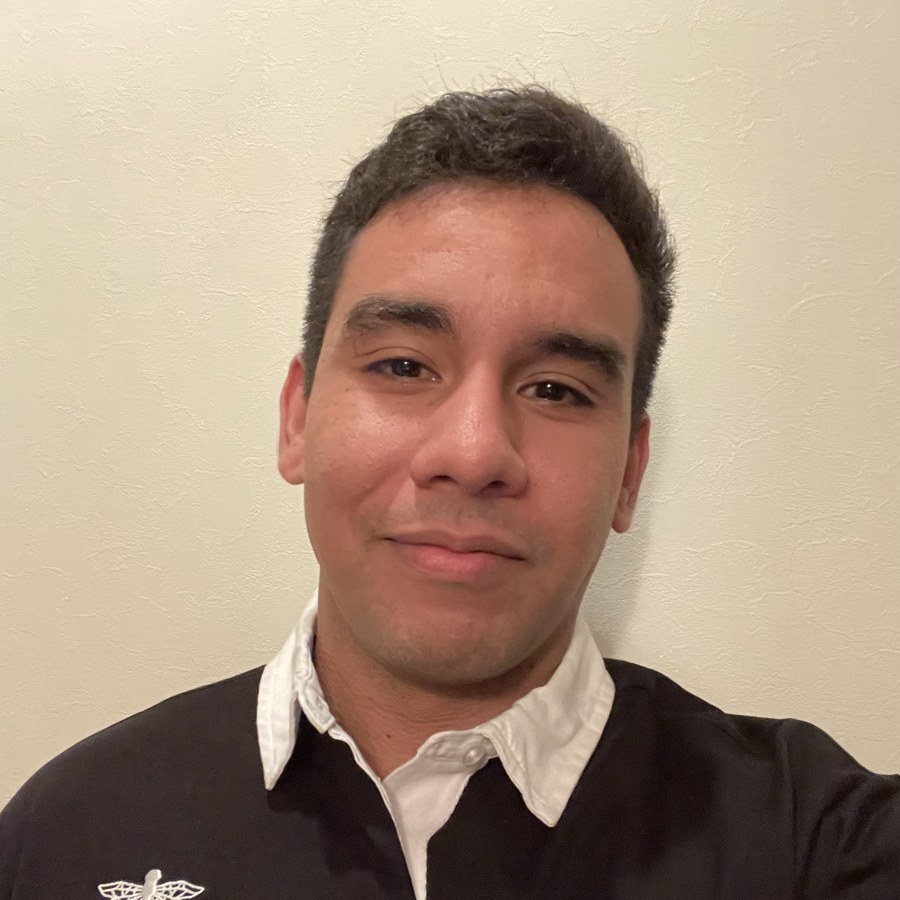
Bryan Rojas, founder. Six years as an Air Force intelligence analyst, U.S. veteran.
I turned messy, high-stakes data into decisions leaders could act on. I hold program evaluations, funder reports, and the AI Accuracy Proof to that same discipline.
And independence is the point, stated as the safeguards rather than as a claim about our motives: our fee does not vary with what we find, we do not sell the repair for what the review exposes, and every report states what we could not establish.
Rather than borrow someone else's work or imply clients we do not have, I published my own standard and made it checkable, published full reports, some on invented data and some on real public records, every figure traceable.
It is modeled on the analytic standards the U.S. Intelligence Community holds its own analysts to, ICD 203, the same discipline federal program-evaluation standards (OMB M-20-12) ask for. Before anything ships, a program checks the mechanical half, that every figure in the report traces to a source we can name, that no small group is reported in a way that could identify a person, and that the wording of a finding matches the strength of the evidence behind it.
The judgment calls are walked by hand.
My standard is honest scales (Proverbs 11:1): stated confidence never exceeds the evidence.
Answered before you ask
What does an evaluation cost?
How fast can you deliver?
Why hire an independent evaluator at all?
What will the report look like?
Have a report due or a survey to run?
Email me directly. You get an answer from the analyst, not a form queue. For an AI workflow, see the AI Accuracy Proof page.